


About Raid:
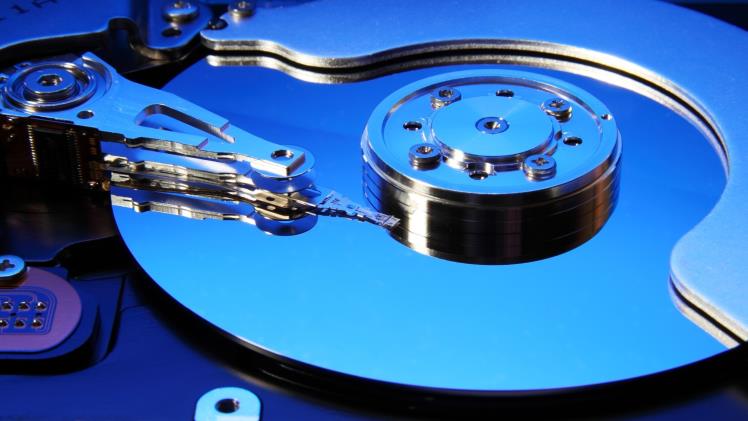
RAID, or Redundant Array of Independent Disks, is a data storage technology that involves combining multiple physical hard drives into a single logical unit to improve data protection. In the context of hard drive recovery, RAID configurations can complicate the process. While RAID systems provide redundancy and fault tolerance, they are not a substitute for regular backups. If a drive fails in a RAID array, data can often be reconstructed from the remaining drives using parity information. However, RAID recovery can be complex and requires specialized knowledge and tools. Data recovery specialists such as Stellar Data Recovery can provide Raid Data Recovery Service and can assist in scenarios where multiple drives fail simultaneously or when there’s a need to recover data from damaged drives in the array.
Raid Level:
There are various RAID levels, and each one offers a unique balance of storage efficiency, performance, and data redundancy.
RAID 0 focuses on enhancing performance but offers no redundancy by striping data over several disks. RAID 1 on the other hand uses half of the total storage capacity for redundancy while offering fault tolerance by mirroring data across pairs of drives. By distributing parity data across all drives, RAID 5 uses block-level striping with distributed parity to enable both performance and redundancy. Dual parity is used in RAID 6 to further increase redundancy, enabling the array to endure the failure of two drives.
Beyond these fundamental levels, there are variants like RAID 01, RAID 50, and RAID 60 that mix various RAID levels to meet particular performance, fault tolerance, and storage capacity goals. There are trade-offs between each RAID level’s cost, capacity use, and performance improvements. Considering things like the intended purpose, financial constraints, and required level of data protection will help you choose the right RAID level. The number of disks required for a particular RAID configuration, as well as hardware and software RAID implementations, must all be considered.
Naturally, the following is a concise review of RAID levels 2, 3, 4, and 7:
Bit-level striping and dedicated Hamming code parity disks are used in RAID 2 for error correction. Due to its complex hardware requirements and meager practical benefits, it is rarely used in modern storage systems. Byte-level striping is used in RAID 3 along with a separate parity drive for error recovery. The single parity drive can compromise performance even when it provides high data protection. Similar to RAID 3, RAID 4 employs dedicated parity and block-level striping. The single parity disk creates a possible bottleneck even though it delivers superior performance. For improved performance and reliability, RAID 7 combines real-time integrated hardware controllers. It offers features like hardware-based encryption and many parity techniques for robust data protection. Despite having distinct advantages, these RAID levels (2, 3, 4, and 7) have not been as widely used as more adaptable and effective RAID configurations.
Backups cannot be substituted with RAID
While RAID (Redundant Array of Independent Disks) systems have a lot to offer in terms of performance, they should never be used as a replacement for thorough data backups. RAID provides several levels of redundancy and data distribution, which helps to decrease the impact of drive failures and protects against hardware failures. RAID provides protection against other important risks of data loss, such as mistaken file deletion, data corruption, etc.
On the other hand, backups entail making multiple copies of the data and keeping them elsewhere apart from the main storage system. This guarantees defense against a wider range of dangers, even some that RAID cannot handle. Having trustworthy and current backups enables recovery with the least amount of downtime and loss in the event of data corruption, virus attacks, or catastrophic hardware failures. Therefore, a comprehensive strategy that offers both operational continuity and thorough data protection is formed by combining RAID for immediate availability and redundancy with regular backups to remote or cloud storage. It’s critical to remember that even while RAID is an essential component of data management, a well-considered backup strategy should always come first.
Should I Use RAID When?
When looking for stronger fault tolerance, better data security, and faster data storage performance, RAID (Redundant Array of Independent Disks) should be used. Use RAID in situations where quick data access is essential, like database servers, content delivery networks, or workstations for video editing. In situations when system uptime is critical, RAID configurations can help maintain system availability in the case of drive failures. RAID is also appropriate for applications like file servers or virtualization hosts that need to strike a balance between performance and redundancy. For complete data recovery possibilities, RAID must be combined with routine backups and should not be used as a solitary backup method. The best RAID level for your use case will be determined after considering the particular requirements of your workload, the significance of data integrity, and the intended trade-offs between performance and redundancy.
What Can’t RAID Do?
RAID (Redundant Array of Independent Disks) has significant advantages in terms of data redundancy and performance enhancement, but there are a number of significant drawbacks to be aware of. First off, regular backups are still necessary even with RAID. While RAID can lessen the impact of hardware failures, it cannot prevent data loss through errors, disasters, or inadvertent deletion for recovering data from this type of data loss take the best data recovery service from Stellar they can recover your data from any type of data loss scenarios.
In case of Software-related problems, such as operating system failures, malware infestations, or application defects that might still affect data integrity, are not eliminated by RAID, however. Not all RAID levels provide real-time data protection, and their capacity to tolerate drive failures varies. RAID system setup and management can be difficult and require careful consideration of hardware compatibility and potential weak points. Finally, although RAID can speed up read and write operations, it cannot take the place of other system elements like CPUs, RAM, and network connections, which must all be tuned for performance.
